Hi All,
sharing details of another session i was able to attend yesterday which was organized by SCAN group. The session details are:
Session Name: Workshop on Sensory Issues relating to ADL (Activities of Daily Living) Training – Sleep
Date: 17th September 2019
Timing: 10 am to 12:30 pm
Venue: Mitr, T-18/2, Coastal Road, Kalakshetra Colony, Besant Nagar, Chennai – 90
Charges: 150 Rs per Person ( Refreshments were provided)
About the Speaker: Mrs.Lalitha Sridhar is a rehabilitation consultant and developmental therapist specializing in sensory integration and neuro developmental therapy. She is an educator and counselor for children with development / special needs and their parents. Lalitha has over 30 yrs of experiences in India and abroad. She has worked with children across all age groups, from early intervention to vocational training and has been providing programs across age groups. Her core areas of work are assessment, intervention and developing holistic programs for children with special needs. She has worked with parents in guiding, training and empowering them in their journey.
This session was part of the ongoing “Sensory Integration ADL Workshop/Training” series, i.e. Feeding > Toilet Training > Sleeping > Communication > Behavior. Today the area covered was SLEEPING. FEEDING session details was already posted, i will post the details of TOILETING later, as i did not attend the session personally, my wife has attended this … had to go over her notes and understand in order to make that post …which is a lengthy process, hence parked it aside for now 🙂
Today session was on Sleep, the participants were less in number compared to earlier sessions to begin with, however there was no compromise on the energy levels of
Mrs.Lalitha Sridhar. She did her presentation the same way as she would have addressed a larger audience. She also clarified that Learning is an Individual process and she does not do any workshops based on textbooks which does not make sense, her workshops are purely based on her knowledge gained from working with various children’s till date. She also justified why it is important to have these sessions in a sequence. She understood that every one want her to jump to behavior topic, and focus on fixing the same. She clarified that you cannot fix the behavior issue without knowing/understanding the root cause of the same, and it is most likely that the root cause could be either an issue with Sleeping, Feeding, Toilet Training and Communication. Hence it is wise to cover these pillars of behavior first, before venturing in to the Behavior related issues. With the knowledge of these pillars, we would be in a better position to analyze a behavioral issue.
At the beginning, i never thought i would write this much notes for a session on SLEEP. She covered this area in length. Below are the few details that was shared in the session:
Also request the readers to correct me, if i had represented any information in a different context than what was intended by her…
To understand that we are in a good shape and health, there are 3 parameters that are essential, they are: 1) Food 2) Sleep 3) Toilet . If these parameters are functioning to the best, we could clearly say that our body is functioning well at 70-80% levels. You would be able to carry on with your day to day activities normally.
WHAT IS SLEEP ?
Participants answered a) Body Rest b) Relaxation c) Repair and Rejuvenation d) Rest of Mind and Brain etc …
When you sleep, you do not connect to the external world but Internal functions are taken care of. It is due to the continuous working of the Internal functions, you get a proper bowel movement the moment you get up in the morning. The external sensory systems which are shut off are: Visual, Auditory, Tactile, Olfactory and Gustatory. Interceptors (i.e. Internal Receptors) are still functioning and the brain helps the organs to function at the optimum level.
DEVELOPMENTAL MILESTONE OVERVIEW
When the child is the born, the first development is the Movement. Motor Development and Sensory Development is the foundation. Movement and senses are important
because our learning is based on that.
1) Age milestone 0-2 Years
It also does not mean, that at 0-2 years range, the child will develop movements and sensory alone, the child will begin the development of next milestone earlier as well, but it will be so subtle and gradual.
Expected Milestones are:
– Physical Action and Movement
– Information through senses
– Development / Learning
2) Age milestone 2-4 Years
Development achieved at 0-2 years age, becomes the foundation for the development at 2-4 years to happen. Consolidation will happen.
Expected Milestone are:
– Cognition, speech and communication
3) Age Milestone 4-6 Years
Even for social and functional issues, the focus is on the foundation i.e. whether developments required at 0-2, and 2-4 was developed as expected or not. We cannot simply put the kid in a group therapy and expect the social / functional skills improve by itself.
Expected Milestone are:
– Social, Emotional and Functional.
Most of them speak of early intervention at the age group of 0-4 years, but she does not believe in it. Her logic is that every 7 years of life is 1 phase of development, and asked
us to observe that the changes in ourselves happen during those phases when we are at 7,14,21 etc …
WHAT ARE THE SLEEP PROBLEMS FACED ?
1) Falling asleep – Difficulty in putting the kid to sleep.
2) Sustaining the sleep – Duration of the sleep
3) (Ability to) Going back to sleep – If the kid gets up at 1 am, he does not go to sleep easily, it will take hours ….
4) Sleep associated with respiratory irregularities (Breathing noise during sleep or no noise while sleeping)
WHAT ARE THE IMPLICATIONS OF SLEEP PROBLEMS ?
1) Cognitive Development – Direct implication on cognitive development.
2) Increase in Repetitive Behaviours – Even excessive crying is a repetitive behaviour, which might have resulted due to improper sleep. Any behaviour issue, we have to problem solve (i.e. find cause of the issue) and not just address the behaviour. Without connecting to the child, if you provide commands (Like don’t do this, don’t do that) you will cause impairment in the cognitive development. We should not be cause of the behaviours.
3) Learning / Development is affected
WHY SLEEP DISTURBANCE HAPPENS?
1) Genetic
This is an area which we cannot do much, there are extensive research that is happening on this, especially on chromosome abnormalities. Having said that we can still
workaround and modify it, find solutions to make you and your child life better. The first solution is not medicine or doctors, avoid getting drugs from psychiatrist for lack of sleep for your child. Especially for children of 0-7 years, no medication for sleep.
2) Sensory – Sensitivity / Overload
This is under our control. For some kids, the movement of bed-sheet noise will be too much to handle, it will wake them up. In toileting and feeding we worked on the Vestibular, proprioceptive, tactile. In sleep the major senses will be auditory and visual., if there is an overload on these senses, it will cause sleep issues. Research says modify more on visual and auditory and then came to tactial.
3) Melatonin Harmone Alteration
Melatonin is the important harmone for sleep. It maintains the rhythm of sleep wake cycle. Foods rich in melatonin helps them to sleep. For melatonin secretion you need have foods that are rich in Tryptophan, Magnesium, Calcium, Vitamin B6 . This maintains the circadian rhythm i.e. waking up and going to sleep.
4) Gastro Intestinal Reflux
Mild Gastro Intestinal Reflux which is often unnoticed also causes sleep disturbance. Also other issues with the digestive system.
5) Anxiety (In adults it will be Depression)
A Sensory issue can cause an Anxiety. Pushing them to perform things beyond their capacity or willingness causes Anxiety. There is a default level of anxiety that is present in all the kids now a days due to the pressure to perform. It also has an impact on the melatonin secretion.
6) Full Stomach
After 2 years and before 3 years, ensure that child should come in to the rhythm of Breakfast > Snack > Lunch > Snack > Dinner. Feeding pattern has its implications on the toileting pattern, both these put together has implications on sleep. Prioritize on this, reading and writing can wait, it will come. Some times if you don’t catch certain things at the right age, you will never get it at all. Whether it is a weekday or weekend you follow the feeding pattern or the Rhythm. I know it is human behaviour we do not tend to follow it for a longer time, in which case at least for first 3 months of your practice please do it. Once you achieved it , it will go back and come back in to the rhythm. Without achieving it, we cannot alter the rhythm ,consolidation will not happen.
Consolidation means for example, when was the last time you have ridden the cycle, say 5-6 years ago, now if i gave you a cycle can you ride it. Yes right .. This is called
Consolidation. It is a skill already inbuilt in your system, as you have learnt it fully. Consolidation phase is a challenging phase.
7) Empty Stomach
8) Awakening the Brain
Visual and Auditory stimulus awakens the brain. Ideal example of such stimulus is the screen time. The brain goes up and high during this time. There is also another scenario
where parents watch a program of their choice, but the kid is doing a different activity(Say drawing, coloring etc) sitting there without watching the tv. The issue here is, the child is focusing on something else in the same room, but he is also loaded with sensory input of the TV sound which is more stimulus, the attention from the child becomes more dispersed. Instead of this, it will be better if the kid watches the program he/she likes. Cartoons does more damage. Tom and Jerry cartoons where lots of jumping happens, watching this the kid will jump. I would advise cartoons that has characters which are jumping, running is minimized or made to zero in this child’s life for some time. Research says for a normal child who watches excess television may result in ADHD, which is an induced condition.
SOLUTIONS TO THE SLEEP PROBLEMS
1) Sleep Rhythm Maintenance
Rhythm can be defined as maintaining discipline over a period of time. Natural rhythm of an environment is Day and Night which is never altered, similarly we have to be very
serious in maintaining the rhythm of our children. In 0-7 years or age it is very important, hence don’t leave it.
a) Diet Rhythm – It refers to the food that the child consumes, not referring to any fancy diets.
b) Sleep Rhythm
c) Wake Rhythm
d) Day to Day activity Rhythm – Toileting Rhythm is very important
Things to follow in Maintaining the Sleep and Wake Rhythm:
- No to eating food and immediately going to sleep.
- Child should be awake for 2 hours after having the food.
- Maintain the time with the gap of 30 minutes. i.e. Child goes to sleep between 9:30 to 10:00 which is the Rhythm you set for the Child.
- For Young child i.e. 2-7 years old, a sleep interval of 10 pm to 6 am is more than enough, need not sleep till 8 am.
- On an average an individual or a growing child needs sleeping time for 8-10 hours
- Even a teenage adolescent boy or girl needs that 8 hours of sleep, in adolescence it just goes off gear. They sleep way past midnight, get up close to noon which causes lot of behavioural issues in them which are hard to fix.
- Above 45 years of age, it comes down to 6 hours.
- Afternoon nap is enough till the child turns 3 years old. After which put the child in to night pattern. If the child beyond 3 years of age is still continuing afternoon nap pattern, it is very difficult to make the kid fall in to sleep in the night.
- Even if you are going to give afternoon nap for your child, time should be from 1 pm to 3 pm, because you need 7 hours of gap before the child can fall asleep next.
This cycle has to be maintained every day, whether it is a weekend or weekday, till the pattern is completely established. Once it is established there will be an offbeat of some
variance, which is acceptable.
2 ) Fix sensory overload and sensitivity
- No TV time before 1.5 hours of sleep
- Lots of Calming activities between 8 pm to 9 pm i.e. prior to sleep. Avoid jumping, rough play with kids during that time, this will arouse the kid.
- Background instrumental music can be played from 8 pm in a very mild volume, like how it is played in restaurants. Don’t go for pure tambura / shruthi music alone, opt for soothing instrumental music such as flute. A Big NO for songs during that time.
- Lets the child not enter in to a brightly lit room during sleep. The room should look dull. Don’t make anything special for the child which may impact his/her siblings.
- After coming to the room, don’t speak or advice, do not give auditory input. There is no need to talk. Do the talking, story telling outside bedroom and not inside.
- Do not breastfeed beyond 1 year, the child does not want to sleep at all. It becomes an emotional attachment. The child is so aware of it, every 1 hour he is up for the feeding. Mercilessly stop it. If you don’t do things age appropriately, development will not happen age appropriately.
- Use Cotton washed bed-sheets. Don’t use brand new sheets for your child to sleep, it is not comfortable for most of the children as the starch smell from the sheet and the kinkiness make it very uncomfortable for them. Have couple of washes so that the clothing becomes to its natural state.
- Put both Vests and Inner’s in cotton and 1 size smaller than the actual size, when the child sleeps it will give them the tactile input. Child will feel more comfortable and secured. Once the sleep pattern its set, you can choose a looser clothing. This is helpful even in masturbation. When you put loose garments to the child, there is no feel of snugness in the child, he feels so insecure, falling asleep will become very difficult.
- After 7 years, maintain distance between you and the child like put pillows on side and sleep to the next.
After 14 years, give a lot of physical space between you and the child.
After 16 years, it has to be in a separate bed. Eventually progress it to a separate room.
SLEEP INDUCERS
1. Lavender Oil
Lavender Oil helps indulging in sleep. It is expensive and available in Organic stores. Take 2 drops of it and mix it in coconut oil, apply on the backside of the childs ears and
rub it in the wrists.
2. Vasambu (Acorus calamus or Sweet flag)
Vasambu should be given orally. A pinch of it can be mixed with milk and given to the child an hour before sleep. You can give it at any age, only the quantity differs. The
quantum should never cross 2.5 ml.
3. Foot Massage
Little bit of foot message will help in the sleep. Before hitting the bed, give a compression on the ball of a big toe and hold it till 7 counts and repeat it 10 times and move to the other foot.

4. Compression on Back
Instead of weighted blankets and jackets, try giving compression on the bank prior to sleep. Compress using your palms on the upper, middle and lower back. Hold the each
compression of 5 counts and perform it for 3 times.
Ignore/avoid compression on the spine, which will cause respiratory difficulty.


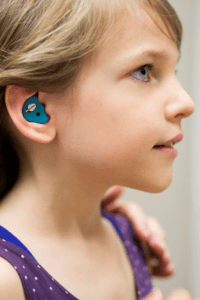
5. Ear Plugs
One of the major distraction in putting the child to sleep is the noise disturbance. Use earplugs (Not the headphones) which reduces the decibels of the noise that reach the ear.
If the child allows you, you can place it in their ear before sleep, else place it after they slept in one ear it will if the child allows you to . Cottons were advised earlier, however
there have been instances where it went inside the ear.
6. Wrapping
Wrapping helps in calming the child which helps in inducing the sleep. When you do wrapping for your child, ensure that both hands must be inside. Wrapping also improves the communication, the child will engage with you lot more. Do not try Wrapping first in the bed room, make few rehersals and familiarize in the living room, before trying it in the bed.
FOOD THAT HELPS TO SLEEP
1) Tryptophan
It helps in melatonin secretion, which promotes sleep. Few sample foods that contains Tryptophan are:
Dairy Foods, Sea food (Tuna, Salmon), Nuts and Seeds (Walnuts and Almonds), Sesame seed with jaggery, Legumes (Rajma, Chick peas), Fruits (Apple, Banana, Avacados,
Peaches), Rice, Barley, Corn etc …
2) Magnesium
It is considered as sleep mineral they are natural relaxers. When you face difficulty in going to sleep it means the magnesium levels are NIL or substantially less. Consume
magnesium rich food such as Leafy greens, Nuts and seeds (Almonds, Peacons), Fish, Banana, Avacados, Soya Beans, etc.
3) Calcium
When you face difficulty in sustaining the sleep, i.e. child wakes up in middle of sleep and difficulty in returning to sleep, please consume Calcium rich foods such as:
Milk, Cheese, Yogury, Leaf greens, Fortified cereals (without sugar), fortified orange juice, okra, broccoli. enriched greens. Avoid tetra pack items as they contain
preservatives.
Dairy products that has the combination of tryptophan and calcium are the best sleep inducers.
4) Vitamin B6
When the child faces mood disorders or depression it will result in Poor sleep (i.e. no deep sleep). Those kids should ideally have foods that are rich in Vitamin B6:
Pista nuts, fish, dry prunes (good for General digestive pattern), banana, avacados, spinach, pomegranate, olives, tomato, grapes, cucumber etc ….
You can introduce new food items of your choice that falls in any of the above categories. If you can incorporate at least one component of the above food items, in your every meal or snack, you will see results. Also don’t go for big bang approach, like all vitamins, calcium’s, magnesium’s foods on a single go, avoid giving foods in big chunk all of a sudden. Incorporate smaller portions of it in their meal on a daily basis.
Also in the name of diet, by cutting down nutrients and minerals, i am not sure what solution we are trying to achieve. We get a hyperactive and a malnourished Child. Focus on overall improvement and long term goals for the child. Do not deprive the body from minerals and vitamins. Think before getting in to diet.
FOOD THAT NEEDS TO BE AVOIDED / FOOD THAT IMPACTS SLEEP
1) Spicy food in the evening
2) No caffeine (Coffee / Tea) drinks in the evening
3) No Beverages (pepsi, for adults it is alcohol)
4) Food high in fat in the night
5) Food high in the protein in the night (Sundal to be given earlier in the evening because protein digestion is not easy)
6) Food containing water such as water melon, pumpkin to be avoided after 8:30. Also no water beyond that time.
7) Heavy meals before bed time
General Areas/ Response to Parents Queries:
1) When speech is the problem, you cannot blindly work on speech therapy. We have to analyse whether the foundation required for the speech to develop has been attained or
not. i.e. Motor Movements and Information processing through senses. A speech therapist should work on the Motor Movement and Senses, which lays the foundation for the speech.
2) You have to work on the motor movements even if there are no issues with those movements in your child at least for 10 minutes. You work on Multiple Complex skills for such child for 10 mins. For example, Climbing stairs, negotiating, on one leg like hopping, kneel waking, crawling which completes 1 set. You begin with 2, later move to 3, 4 and upto 5. You can do it yourself without a need of therapist. Have these combinations, but do not challenge the kid. Always use the principles of learning i.e. easy to difficult, kid should taste the success, appreciate . Do not make activities more complex , your child may completely avoid performing that activity. Just to satisfy your sense of completion do not force the child to perform more complex activities, take it gradually. A person will feel happy in performing things that he knows. There is an emotional component that is involved in the learning as well, it is not restricted to motor and cognitive component, without addressing it we cannot reach anywhere.
You have to give couple of trials of activities which the child already knows which makes him emotionally happy and confident, later you try with another new one, which is a bit
harder, the child will make an attempt/co-operate in performing the newer activity.
3) Understanding and working makes a big difference in your child rather than putting your kid in variety of therapies. Every therapy will focus on their own goals and does not
collaborate or analyze in depth.
4) As a parent of children with developmental delay it is a challenge to get that inner strength and keep moving. A Therapy should help you in pulling up and help you to move with your child, if it is not happening just drop it.
5) In answering a question of a participant where her child progress is different from another child of the same age group who began therapy at the same time, she responded
by saying stop the comparison. She related the same with different analogies like parents discussing the marks of their students with fellow parents and parents comparing the Individual goals given to their child with another child complaining if there are differences. Every child and every parent is running their own race and competing with themselves and not others. Her advise to parents is that, as therapists we can hold hands with you parents, as long as you allow us to hold, whatever may be the duration or situation we must try our best in solving the problems faced by the child without giving up.
6) No child is same at the 0-7 age interval. If you put all the children of same age group in the same grade, all the children will not learn at the same pace. For 0-7 years of age
group, stick on the Individual plan designed for your child. Identify strengths of your kid, every kid will have one. All developments of the child may not be expressly visible, you as a parent would know the area your kid has progressed. In the development of sensory systems, the wiring is not same for every child, the percentage differs for every kid.
7) Challenges are different for 0-7 age interval when the kid is faced with an syndrome, Cerebral Palsy, Cognitive Challenge, Congenial (by birth).
8) Sleeping early is not important, the rhythm is important. Rhythm means setting the body clock to a fixed time. 9:30 to 10:00 pm is the fairly good enough time for a 4 year old to fall asleep and get up by 6 am. By the time child is 4, you should avoid the habit of Binge eating, you cant keep giving food. For example, how many times we as adults get
up at the night just for the sake of feeling hungry or eating purposes, its almost NIL. We should bring the kid to that Adult level. It is advisable for children to go to sleep after 2
hours of eating. The three parameter that would help here are:
a) Stomach should be full
b) Stomach should not be empty
c) Maintain same rhythm every day.
9) Opt only for age related activities, it should make some meaning and sense to the child. Yoga at 4 years old does not make sense.
10) Don’t blame the child for something which you have given or introduced which became a pattern now. Like excessive TV time.
with that she ran out of time, however still completed the content planned for that day.
For Individual assessments, we can call her and book for appointment. She consults only in Mylapore location, typically on saturdays between 10 am to 12 pm, which can be discussed over phone when you call for appointment. Phone number was available with SCAN.
My Personal Feedback on the session:
When you listen to Mrs.Lalitha Sridhar talk on any topic, you experience more positive vibe and hope for further improvements, even if you are in a stage where you have
completely given up on your child. She always look for ways to improve a situation, behaviour, looks like someone who might not give up easily on any case. Even though the participants got used to her by now, still she frequently checks with everyone if she is fast or not, whether participants understands her or not.
If i can provide an analogy about Mrs.Lalitha Sridhars talk, it is like listening to Crazy mohan dialogues i.e. before we complete laughing for the joke number 1, we might have
missed 3-4 jokes already . Similarly she is dropping jems every second, when we are awestruck on point number 1, she is already in point no 4. I am not referring to the speed here, i am conveying that she has so much wisdom to offer and also justifying the strange look in the faces of the participants she experiences when the session is in progress. 🙂
I thank Scan for organizing this session and looking forward for the upcoming sessions on Communication and Behaviour.
Regards,
Saranya and Karthik
karthiksaranyaparents@gmail.com
 Autism Spectrum Disorder - Personal Experiences (Chennai Family)
Awesome summary
Not even a single point missed on the presentation..
My small bit about food ..
Brown rice கை குத்தல் அரிசி is rich in magnesium and vitamin b6. Ordinary rice can be replaced by brown rice in ratio 1:1 for making idli / dosa batter . Idiyappam can also be made with brown rice .
LikeLike
Thanks for sharing information
LikeLike
Very nice and information.Thank you so much.
LikeLike